
Inshorts (Quick Highlights)
Indian sweets and snacks can be carried if packed well and sealed, following safe food practices.
Dry Indian spices are allowed in Canada. Seeds may have restrictions.
Gifts are allowed, but follow Gifts to Canada customs rules and declare items to local police if required.
All food items must be declared at Canadian customs. Failing to declare food products on your customs declaration form can result in fines or seizure under the criminal code.
Agriculture products are subject to strict regulations, and some may be prohibited from entering Canada. Always check the latest rules from the Government of Canada before traveling.
Customs regulations in India require that all items brought into the country must be declared at customs, and Indian rupees or other currency must be declared if exceeding limits.
CATSA rules decide what goes in hand baggage and what goes in checked baggage, with liquids and gels restricted to containers of 100 ml or less at the screening point.
Traveling With Love From Home
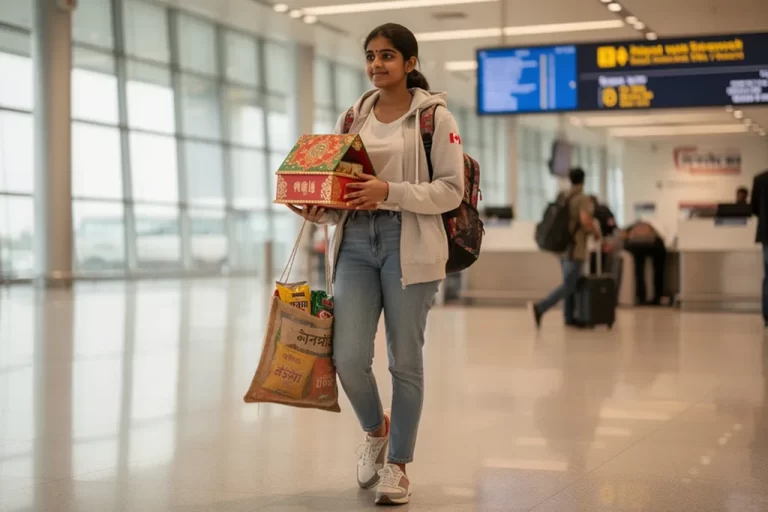
For many Indians going to Canada, carrying food from home is an emotional experience. Whether it is Indian sweets to Canada, dry snacks made by your mother, or Indian masalas allowed in Canada, these items bring comfort during a long journey.
However, rules for taking food and gifts may differ in other countries, so always check the specific regulations for your destination.
When flying to India, check flight deals to India for the best prices and options, including flights to Delhi and other major cities. Whether you choose a flight to Delhi with direct flights or connecting flights, understanding customs and security regulations will help ensure a smooth journey.
But before packing, it is important to understand Canada customs rules and CATSA food items guidelines. This will help you avoid problems when you land. Strict regulations and border protection measures are in place to ensure compliance with customs rules.
Indian Sweets to Canada (Guidelines and Tips)
Indian sweets are mostly allowed in Canada if they are dry and neatly packed. Commercially packaged sweets are recommended for import to avoid issues with inspection. Dairy products from non-US countries are restricted but dairy-based Indian sweets are often allowed if declared and meant for personal use or medical purposes.
Prefer dry sweets such as soan papdi, besan ladoo, barfi, and dry gulab jamun mixes.
Avoid watery sweets like rasgulla or gulab jamun in syrup.
Carry sweets that stay fresh longer, especially if you have connecting flights through major cities.
Seal sweets properly in airtight boxes with individually protected packaging to prevent short circuits or damage.
The maximum quantity limit for bringing sweets or spices into Canada is 20 kg per person.
Indian sweets on flights should be packed securely to avoid damage and comply with airline and security regulations.
Indian Sweets Packing Tips
Good packing stops leakage, melting, and mess inside your suitcase. Properly packed sweets and spices help maintain freshness and prevent damage during your journey. Taking the time to seal and protect your items ensures they arrive safely and ready to enjoy.
Use vacuum-sealed packaging if available.
Wrap sweet boxes in cling film and put them inside a zip-lock pouch.
Put sweets in the middle of the suitcase for protection.
Avoid items that melt easily due to ghee.
Maple syrup and similar liquid items must comply with liquid restrictions and be carried in checked baggage.
Indian Spices Allowed in Carry On Baggage to Canada
Most dry spices are allowed. These add comfort when cooking in Canada. Spices are considered agriculture products and are subject to customs regulations. Commercially packaged spices are recommended for import to avoid issues with inspection.
Allowed items: red chilli powder, turmeric, garam masala, chaat masala, pav bhaji masala, cumin, cardamom, cloves.
Avoid seeds that can sprout, as they may be restricted. There may be other restrictions on certain types of spices or spice mixes.
Do not carry spices mixed with any meat or fish powder.
Spices should be stored in checked baggage as they may require additional screening due to being granular materials.
All spices in powder or physical form, including chili, are prohibited in carry-on baggage but allowed in checked baggage.
Note: There are limited quantities of spices allowed per person according to customs guidelines. Check the latest regulations to ensure compliance.
Indian Pickles Allowed Canada and Other Food Items
Many Indian families love carrying pickles, snacks, and homemade items when traveling. These food items are allowed with proper packing and declaration to ensure a smooth journey. It is important to carry safe and well-packed food to avoid health issues and comply with customs regulations during travel.
Pickles are allowed if sealed tightly and placed in checked luggage.
Dry snacks like bhujia, namkeen, mathri, murukku are allowed.
Avoid dairy-based chutneys and fresh vegetables.
Keep chutneys, pastes, and liquid foods in checked bags.
Pickles are allowed in both carry-on and checked baggage when traveling from Canada to India, but chilly pickle is only allowed in checked baggage.
All food items brought should be for personal consumption only and not for resale.
Indian Gifts for Canadians (Customs Guide)
Indian gifts are always appreciated in Canada, making them a thoughtful way to share your culture and love. Whether it’s traditional handicrafts, sweets, or spices, these presents carry a special meaning for recipients. Understanding customs regulations ensures your gifts arrive smoothly and are enjoyed without any issues.
Best options: handicrafts, shawls, diyas, Indian art pieces, small souvenirs.
Avoid items made from bone, ivory, or animal skin.
Keep gift value under CAD 60 for duty-free entry. Gifts valued over CAN$60 may be subject to duties and taxes in Canada.
If you are bringing alcoholic beverages as gifts, they must be in their original retail packaging and are subject to duty free alcohol limits.
Note: There are restrictions on the net weight and alcohol content of alcoholic beverages that can be brought as gifts.
Canadian Customs Declaration for Food
Declaring food is crucial for a smooth customs experience. Always declare all sweets, snacks, spices, and pickles to avoid fines or seizure.
Declare all agriculture products, including spices and snacks.
Customs officials may inspect your bags, but honest declaration prevents penalties.
Do not hide any food items, regardless of size.
Items like baby powder, breast milk, and medication must be declared and may require inspection.
If carrying food for medical needs, be ready to provide documentation if asked.
Bringing Indian Snacks to Canada (CATSA Guidelines)
CATSA decides what you can take in cabin bags and carry on bags. Under CATSA regulations, liquids are limited to containers of 100 ml for carry-on baggage; these are considered limited quantities as per CATSA regulations.
Dry snacks are allowed in your hand baggage. Only small quantities of snacks are allowed in carry on bags to comply with security rules.
Liquids, chutneys, and pickles must be in checked bags.
Sweets in syrup should also go in checked baggage. Liquid or gel-like sweets are restricted to containers of 100 ml or less in carry-on luggage.
Prohibited and Restricted Items
Certain items are prohibited or restricted due to safety concerns or regulations under the criminal code.
Prohibited items include sharp objects like utility knives, box cutters, razor blades, toy guns, pepper spray, tear gas, and explosive substances.
Spillable batteries are prohibited in both carry-on and checked baggage.
Spare batteries and lithium ion batteries are allowed only in carry-on baggage and must be individually protected to prevent short circuits.
Fuel containers, flammable liquid, and aerosols exceeding limits or without suitable means to prevent inadvertent release are prohibited.
Mobile phones, Satellite phones and GPS devices require proper authorization and may be restricted.
Hoverboards and Segways are prohibited.
Life jackets and other personal safety devices with airbags must have pressure relief valves and pyrotechnic trigger mechanisms that are packed to prevent accidental activation.
Travel Tips and Requirements
Always carry your boarding pass and valid identification.
Mobile phones and other personal electronic devices must be switched off or in airplane mode at the security checkpoint.
Be aware of local police regulations and customs requirements when traveling.
Keep detailed information and receipts for gifts and food items to facilitate customs clearance.
Avoid carrying large amounts of Indian rupees or other currency without declaration.
If traveling with a family member, ensure all items comply with customs and security regulations.
Follow all instructions provided by the Government of Canada and airport security personnel.
For assistance with your travel plans, contact Mann Travel for expert advice and booking support.
FAQs
Are pickles permitted in Canada?
Yes, but only if sealed tightly and declared on arrival.
What Indian food items are not allowed in Canada?
Fresh fruits, vegetables, dairy-heavy foods, and uncooked meat.
Can I bring items like ice packs, dry ice, or life jackets?
Ice packs and dry ice (solid carbon dioxide gas) are allowed with restrictions on total net quantity and proper packaging.
Are there special rules for international flights or personal items?
Yes, international flights may have other restrictions, and personal items are subject to security screening and regulations that may differ from domestic flights.
How should I pack items with special requirements?
Some items require a hard sided container, and suitable means must be used to prevent inadvertent release. Always check for other restrictions that may apply to your items.